Why Snowmelt Season Is the Real Test for Your Sump Pump
In Waterloo, the most dangerous time for a basement is not always during a heavy summer thunderstorm. It is often the weeks between late February and April, when a deep frost layer is still locked into the ground and the snowpack suddenly releases millions of gallons of water. Because the soil cannot absorb that melt fast enough, the water follows the path of least resistance, which is often against your foundation and under your basement slab. That is when your sump pump goes from a quiet background appliance to the hardest-working piece of equipment in your home.
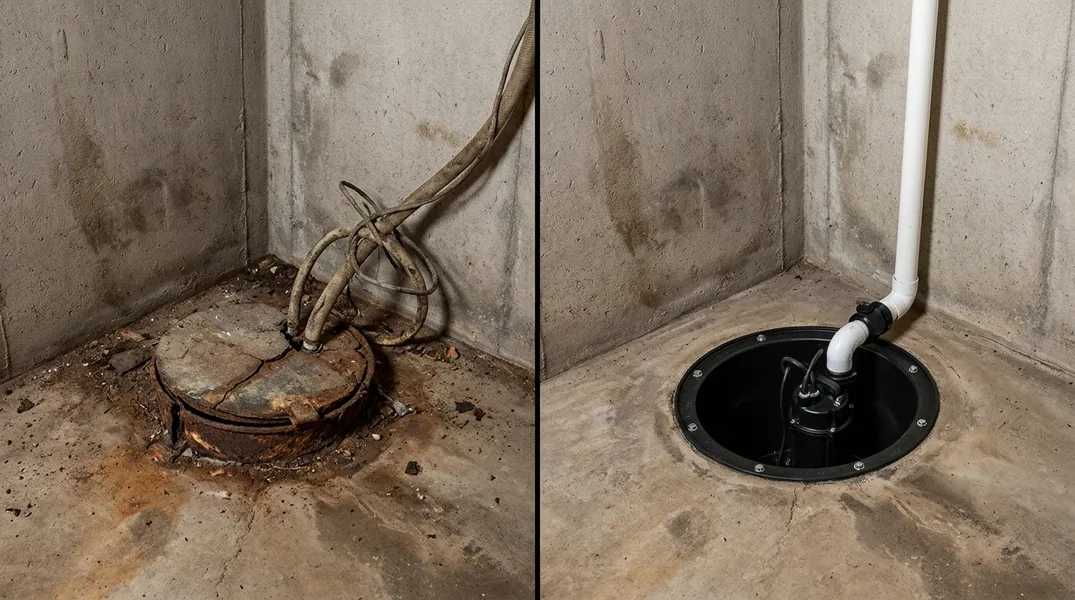
If your pump has been sitting idle since October, it has had months to collect dust, stiffen up, and lose its prime. A float switch that worked perfectly last spring may now stick or fail to trigger. Before the first warm week hits, take a Saturday afternoon to inspect the system yourself. A little preventive maintenance now is far cheaper than emergency Basement Waterproofing after a flooded floor. If you are not comfortable crawling into the pit, call Waterloo Waterproofing at (319) 505-8848 and we can inspect it for you.
The Sump Pump Check Valve: Small Part, Huge Consequences
The sump pump check valve is a one-way flap installed on the discharge pipe just above the pump. Its job is simple: when the pump shuts off, the valve stops water from flowing backward down the pipe and re-filling the pit. Without a working check valve, your pump cycles on and off repeatedly, burning out the motor and never actually moving water away from the house. During snowmelt season, when the pump may run every few minutes, a failed valve can shorten the life of a brand-new pump in a single week.
Test yours by watching the pit during a cycle. If you hear water gurgling back down after the pump stops, or if the pump restarts within seconds, the valve is likely stuck open or clogged with debris. Many valves are plastic and can crack after a few Iowa winters. Replacing one is an inexpensive DIY job, but if the discharge line is glued or the pit is cramped, it is worth having a professional handle it. While you are down there, check that the discharge line slopes away from the foundation and does not terminate near a downspout that dumps water right back against the wall.
Battery Backup Sump Pump: Your Insurance Against Spring Storms
Spring in Northeast Iowa brings a nasty combination: saturated ground and severe thunderstorms that knock out power for hours. A primary sump pump is useless without electricity, and a basement can take on inches of water in under an hour. A battery backup sump pump sits in the same pit and kicks in automatically when the main pump loses power or fails. Modern backup units run on sealed AGM batteries and can move thousands of gallons on a single charge.
If you already have a backup, do not assume it is ready. Batteries degrade silently, especially in a cold, damp pit. Test the unit by unplugging the main pump and pouring a bucket of water into the pit to confirm the backup engages. Check the battery terminals for corrosion and verify the date sticker; most batteries should be replaced every three to five years. If you do not have a backup yet, this is the single best upgrade you can make before snowmelt. Ask us about pairing a backup with an Interior Drain Tile System so every drop that reaches the pit has two ways out.
Storm Basement Flooding: Where the Water Actually Comes From
Homeowners often blame the sump pump for storm basement flooding when the real culprit is water that never should have reached the pit in the first place. Snowmelt and heavy rain saturate the soil around your foundation. Hydrostatic pressure pushes that water through cracks in the cove joint, porous block walls, and the seam where the slab meets the footing. The sump pump is the last line of defense, not the first. If your pump runs constantly during every storm, the problem is the volume of water entering the system, not the pump itself.
That is where Foundation Waterproofing and drainage work come in. Exterior Basement Waterproofing addresses the source by sealing the outside of the wall and improving grading, while interior systems manage what still gets through. Homes in Evansdale and Elk Run Heights often sit on older clay soils that drain poorly, making these combined approaches especially effective. If you are seeing damp walls or a white powdery residue (efflorescence) before the thaw, get ahead of it now.
Sump Pump Maintenance Near Me: When to Call a Pro in Waterloo
Some maintenance is genuinely DIY: clearing debris from the pit, testing the float, pouring a bucket of water to confirm the pump cycles, and checking that the discharge line is clear and aimed away from the house. But certain warning signs mean it is time to call a professional. If the pump hums but does not move water, if the pit fills faster than the pump can empty it, if you see rust or oil in the pit, or if the pump is more than seven to ten years old, replacement is usually smarter than repair. A failed pump during a March thaw can mean a flooded basement and thousands of dollars in damaged flooring, drywall, and belongings.
Waterloo Waterproofing serves homeowners across Cedar Falls and the surrounding communities. We inspect sump pits, test check valves, size backup systems correctly, and identify whether your flooding is a pump issue or a drainage issue. If you want a clear picture of what a repair or upgrade would run, you can review our pricing before you call. Ready to schedule? Request a free estimate or call (319) 505-8848. A little preparation now keeps your basement dry when the snow finally melts.
Looking for a professional basement waterproofing contractor in Waterloo? Waterloo Waterproofing responds fast for all your basement waterproofing needs.
Get a Free QuoteOur services: Basement Waterproofing · Interior Drain Tile System · Exterior Basement Waterproofing