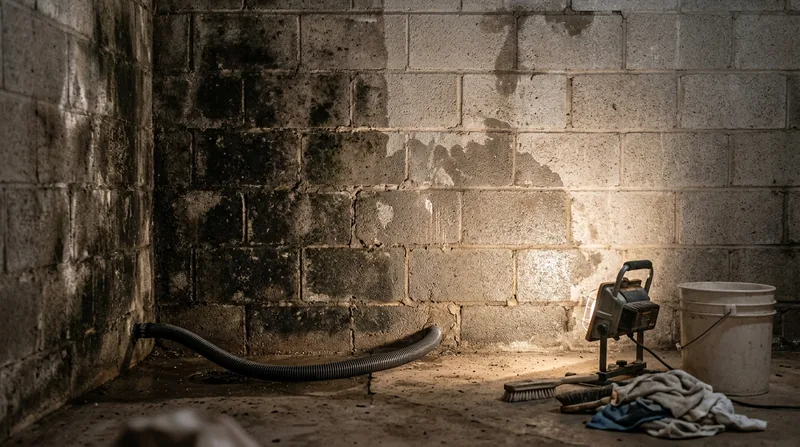




Basement Mold Remediation in Waterloo starts with finding the water, not just scrubbing the wall. Waterloo sits on both banks of the Cedar River in Black Hawk County, and the 2008 flood left a mark on the low neighborhoods that still shows up in basements today. The 1900s-1930s bungalows and foursquares in Sunnyside, the Rath area, and the streets near downtown sit on stone or early block foundations with clay tile drains that have had a century to clog. North and west side ranches and split-levels from the 1940s-1960s have block or poured walls that weep at the cove. The ground here is loess silt and glacial till over clay, which holds spring meltwater and releases it slowly against the walls. We treat the mold and fix the moisture source so it does not come back. Start with a free basement inspection.
Why Basement Mold Remediation Matters in Waterloo's River Neighborhoods
Mold needs three things: moisture, a food source, and time. Waterloo basements supply all three. The loess silt and glacial clay hold water against the foundation long after the rain stops, and freeze-thaw cycles open hairline cracks in older masonry every winter. When that water reaches the interior, it wicks into the block, feeds the paper facing on insulation, and settles into the wood sill plates. The musty smell is the first sign, usually in the spring.
- Hydrostatic pressure pushes water through block walls and shows up as efflorescence and white powder on the lower courses.
- Clogged or collapsed clay tile drains let the water table rise under the slab and seep up through the cove joint.
- Failed sump pumps during a spring storm leave standing water that soaks drywall and framing within hours.
- Missing downspout extensions dump roof water right at the foundation, and the grading in older Sunnyside lots often slopes back toward the house.
Each of these is a moisture problem first and a mold problem second, and we treat them in that order.
Key info: A 1920s foursquare near downtown Waterloo with a stone foundation and a musty basement almost always has two problems: water coming through the wall and no working drain at the footing. Remediation without fixing the drainage just buys time until the next wet spring.
For official guidance on mold and moisture in buildings, the U.S. EPA's mold resources are a solid reference: epa.gov/mold.
How We Run Basement Mold Remediation in Waterloo From Start to Finish
We do not fog a basement and call it done. The moisture has to be identified and corrected, or the mold returns in the same spot. Our process starts with diagnostics and ends with a dry, controlled space. If the source is wall seepage, we look at basement wall sealing and crack injection before we ever open a wall.
- We walk the basement and look for the moisture source: wall seepage, cove joint dampness, efflorescence, a wet sump basin, or a failed discharge line.
- We map the affected area and set up containment with poly sheeting and negative air so spores do not spread to the rest of the house.
- We remove porous materials that cannot be cleaned (wet drywall, soaked insulation, damaged framing) and bag them for disposal.
- We treat structural surfaces with an approved antimicrobial and HEPA-vacuum the entire area, including joists and subfloor.
- We correct the moisture source with drainage, sealing, or a dehumidification plan, and we verify the space is dry before we close out.
The job is not finished until the basement stays dry through a full wet season.
Key info: In a 1950s ranch off Ansborough in west Waterloo, we found mold on the lower two feet of a block wall and a sump pit that had been dry for years because the pump had seized. The fix was a new pump and a battery backup sump pump before any surface treatment. Without that, the mold would have been back by June.
Remediation Approaches We Use in Waterloo Basements
Not every basement needs the same level of work. A small patch of surface mold on a block wall above a known seep is a different job from a finished basement that took on water. We match the approach to the moisture source and the extent of growth.
| Approach | Description | Best for |
|---|---|---|
| Surface treatment and sealing | Clean and treat affected masonry, then seal the wall to stop seepage. | Light surface mold on block walls with minor seepage. |
| Containment and full remediation | Poly containment, negative air, HEPA vacuuming, removal of porous materials, antimicrobial treatment. | Finished basements and larger affected areas. |
| Drainage correction plus remediation | Interior perimeter drain or drain tile repair to relieve hydrostatic pressure, then mold treatment. | Recurring mold from cove joint seepage or a high water table. |
| Dehumidification and vapor control | Vapor barrier and controlled dehumidification to keep ambient moisture low. | Damp basements with condensation but no active leak. |
We choose the lightest approach that actually solves the moisture problem, because overbuilding a small job is as wasteful as underbuilding a big one.
Basement Mold Remediation Cost in Waterloo: What to Expect
Most Waterloo mold remediation jobs start around $1,500, and that figure covers containment, removal of affected materials, treatment, and HEPA cleanup for a typical unfinished basement with a contained area of growth. The price moves up with square footage, whether the basement is finished, how many porous materials have to come out, and whether the moisture fix requires drainage work. A simple surface treatment on a block wall is at the low end. A finished basement with soaked drywall, insulation, and carpet is at the high end.
We always separate the remediation from the moisture correction so you can see what each part costs. If the source is a failed sump pump or a clogged drain tile, that work is quoted separately and clearly. Getting two or three estimates is smart in this market, and any contractor who quotes mold work without finding the water source is guessing. Our full pricing overview lays out the ranges.
What to Look for When Hiring a Basement Mold Remediation Contractor Near Me in Waterloo
Mold work is not a pressure-washing side job. Ask for proof of licensing and insurance before anyone sets foot in your basement, and get a certificate of insurance sent to you directly. Ask how they plan to contain the work area and whether they use HEPA filtration. Ask what they will do about the moisture source, because a contractor who only treats surfaces will be back next spring.
Check references from Waterloo and Cedar Falls homeowners with basements like yours, and ask whether the job stayed dry through the following spring. Confirm who pulls any permits required for drainage or structural work, and verify the rules with the local building department since thresholds vary. Get the scope in writing, including what gets removed and what gets cleaned. You can request a free estimate and we will walk you through the findings.
Basement Mold Remediation in Waterloo: Pricing Guide
| Service | Price | Details |
|---|---|---|
| Surface mold treatment | Starting at $1,500 | Includes containment, antimicrobial treatment, and HEPA cleanup for a contained area on unfinished basement walls. |
| Full basement remediation | Starting at $3,200 | Covers removal of affected drywall and insulation, full containment, treatment, and HEPA vacuuming of the space. |
| Remediation plus drainage correction | On estimate | Needs an on-site look to price the drain tile or sump work that stops the moisture at the source. |
| Dehumidification and vapor control | Starting at $1,800 | Vapor barrier and dehumidification setup for damp basements with condensation but no active seepage. |
| Travel | Included | in Waterloo and surrounding areas, no separate call-out or mileage fee. |
| Estimate | Free | Response within 24h at (319) 505-8848, no obligation to book. |
Indicative pricing, the exact cost depends on square footage, finish, and site access. Free personalized estimate within 24h at (319) 505-8848.


